The Multigenerational Home Renovation Tax Credit (MHRTC) is a federal tax credit for part of the cost of creating a self-contained secondary unit, so that a senior, or an adult who is eligible for the disability tax credit (DTC), can live with a relative. It is refundable, and because it is federal, the rules in Alberta are the same as anywhere else in the country. What it is worth depends on the tax year in which the renovation finished.
We build basement suites in Edmonton, so this guide looks at the credit from the building side: what the unit needs, and what paperwork your contractor should give you. The Canada Revenue Agency (CRA) and Finance Canada publish the rules, and every rule below links to the page it comes from. This is a plain-language guide, not tax advice, so check your own return with CRA or a tax preparer.
What is the $7,500 home renovation tax credit?
The "$7,500 home renovation tax credit" is the MHRTC at its launch rate. When it began in the 2023 tax year, it was a refundable credit of 15% on up to $50,000 of eligible expenses, so $7,500 at most. The credit is tied to the lowest federal income tax rate, and that rate has since come down, so the maximum has too.
You still see $7,500 because it held for two tax years. CRA's 2023 tax tip described the credit as worth "up to $7,500" (CRA tax tip, 2023), and the lowest federal rate was still 15% for 2024. Then the federal middle-class tax cut set that rate at 14.5% for the 2025 tax year and 14% for 2026 and later years (Finance Canada). CRA's MHRTC page for the 2025 tax year now gives a maximum of $7,250.
| Tax year the renovation ended | Credit rate | Maximum credit |
|---|---|---|
| 2023 | 15% | $7,500 |
| 2024 | 15% | $7,500 |
| 2025 | 14.5% | $7,250 |
| 2026 | 14% | CRA had not published a figure as of September 2026 |
In every row, the rate applies to at most $50,000 of qualifying expenses per renovation.
How the credit is worked out
Finance Canada describes the MHRTC as a refundable credit calculated at the lowest federal personal income tax rate on up to $50,000 of eligible expenses (Report on Federal Tax Expenditures, 2026). So two numbers decide the credit: your qualifying expenses, capped at $50,000, and the rate for the year the renovation period ended.
Refundable matters when the person claiming has little tax to pay. A refundable credit can be paid out even when it is larger than the tax owed, which a non-refundable credit can't do.
CRA says the credit is claimed for the tax year in which the renovation period ended, even if the work took more than one year (CRA, how to claim). So the finish date decides which year's rate you get.
Worked examples (our arithmetic, not CRA figures)
We worked these out ourselves from the rates in the table, to show how the pieces fit together. CRA does not publish these amounts, and your own claim depends on your return.
- Say a suite finished in 2025 has $58,000 of qualifying expenses. Only $50,000 counts, and 14.5% of $50,000 is $7,250, the most CRA allows for 2025.
- Say the invoices for a suite finished in 2026 come to $34,000, including $3,000 of appliances (numbers for the arithmetic, not a suite price). Household appliances don't qualify, so $31,000 counts. At 14%, the lowest federal rate for 2026, that works out to $4,340.
- A suite started in October 2025 and finished in March 2026. The claim goes on the 2026 return, the year the renovation period ended, so it is worked out at the 2026 rate of 14%.
Who qualifies
CRA's rules turn on two people. The first is the qualifying individual, the person the unit is for. That person must be 65 or older at the end of the tax year in which the renovation period ends, or 18 to 64 and eligible for the DTC at any time in that year (CRA, who can claim).
The second is the qualifying relation, the family member they will live with. CRA defines this as an adult, 18 or older, who is a parent, grandparent, child, grandchild, brother, sister, aunt, uncle, niece or nephew of the qualifying individual, or of that person's cohabiting spouse or common-law partner.
Say you own a house in Edmonton and want to build a basement suite so your father, who turns 71 this year, can move in downstairs. He is the qualifying individual because of his age. You, his adult child, are a qualifying relation. CRA's main page on the credit sets the purpose: the secondary unit must allow the senior, or the adult eligible for the DTC, to live with a qualifying relative (CRA).
Only one renovation can be claimed for each qualifying individual in their lifetime. CRA's "who can claim" page sets out the rest, including which family members can make the claim.
What the new unit has to include
CRA lists three conditions for the secondary unit (CRA, who can claim):
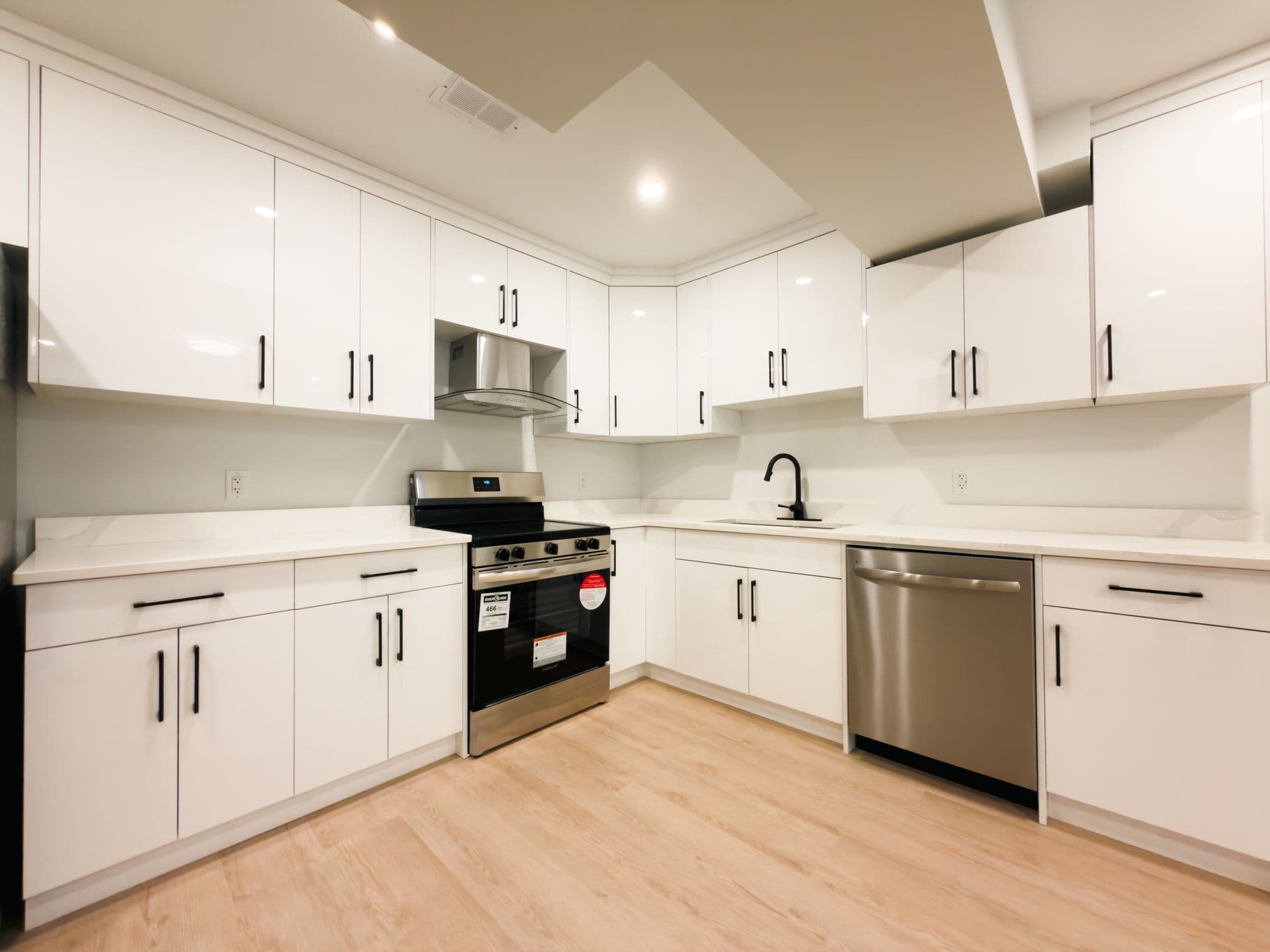
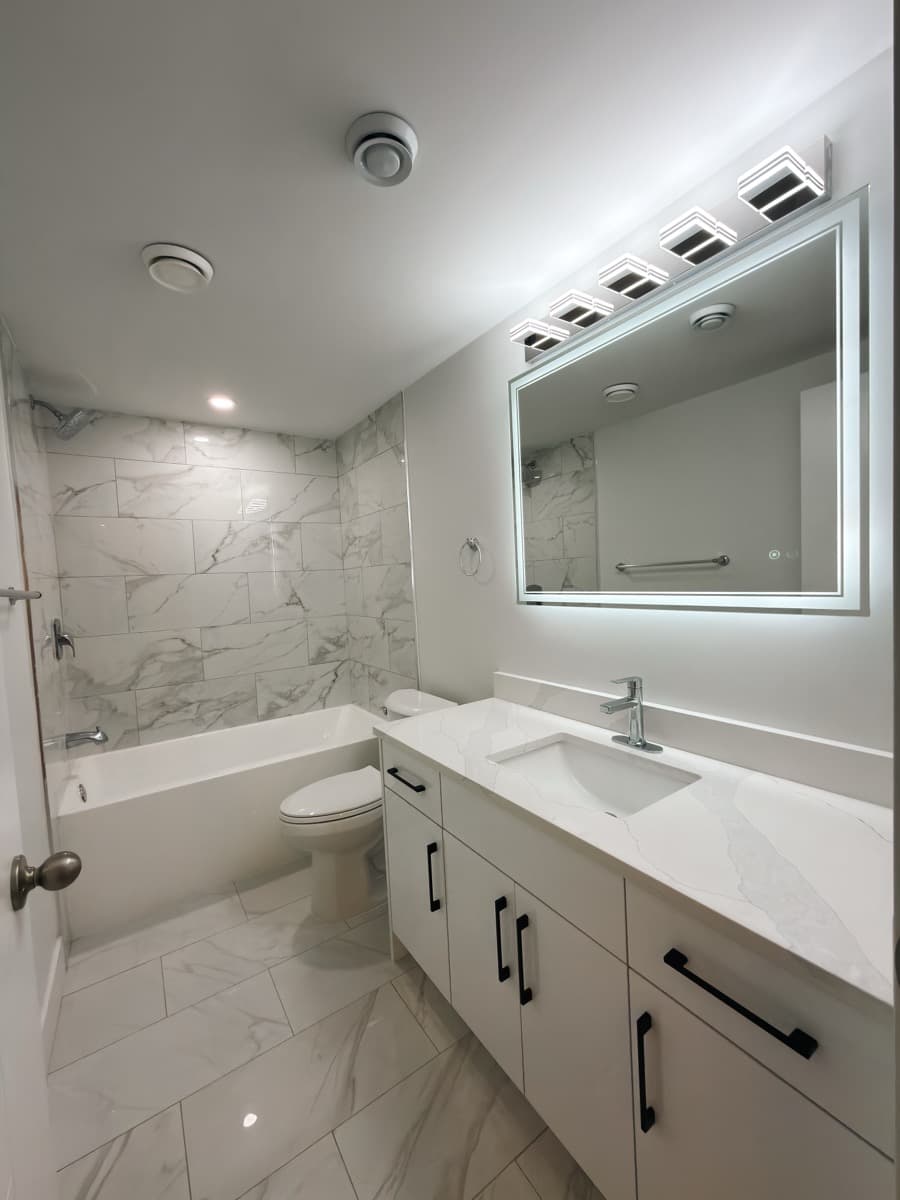
- It is a self-contained housing unit with a private entrance, a kitchen, a bathroom and a sleeping area.
- It is newly built, or created from existing living space that did not already meet local requirements to count as a secondary unit.
- It meets local requirements, permits, codes and by-laws.
In Edmonton, the first condition lines up with how the City defines a secondary suite: a separate dwelling inside a single-detached, semi-detached, row or backyard house, with its own living room, kitchen, bedroom, bathroom and separate entrance (City of Edmonton). The City allows one secondary suite for each principal dwelling or backyard house, and its zoning bylaw defines a suite as having less floor area than the main home (Zoning Bylaw 20001).
The third condition is where the City's permits come in. Edmonton requires permits for every secondary suite.
In 2026 the development permit fee for a suite is $415, and the building permit fee is set by construction value: $120 up to $10,000, $385 up to $50,000, $1,080 up to $100,000 and $2,100 above that, plus a 4% safety codes fee (City of Edmonton). Building code requirements such as fire separation and egress windows are a subject of their own. Our guide to legal basement suite requirements in Edmonton covers it, and the basement development permit guide explains how to apply.
The second condition matters if you already have a basement apartment. CRA's wording covers a unit created from existing living space that did not already meet local requirements to be a secondary unit. A basement with a kitchen and bedroom that were never permitted as a suite may fit that description, but confirm it with a tax preparer before you count on the credit.
Planning a suite for a parent?
We build legal basement suites in Edmonton, pull the permits and book the inspections. You get a fixed-price quote within 48 hours of the site visit.
See legal suite servicesWhich costs count, and which don't
Qualifying expenses can include goods and services, including work by professionals such as electricians, plumbers, carpenters and architects (CRA, expenses you can claim). The same page lists what doesn't qualify: annual, recurring or routine repairs and maintenance, household appliances, electronic home entertainment devices, housekeeping, security monitoring, gardening and outdoor maintenance services, and financing costs for the renovation.
Two of those catch people building a suite. The fridge, range and dishwasher are household appliances, so they come off the claim even though a suite can't exist without a kitchen. And if you borrow to build, the interest and fees are financing costs, which don't count either.
For what drives the cost of the suite itself, see our basement development cost guide, and for the kitchen in particular, what drives kitchen renovation cost in Edmonton.
If you do finance the work, our renovation financing through iFinance Canada offers rates from 0% to 9.99% on approved credit, with terms up to 48 months and amounts up to $50,000. Meadow is not the lender.
How to claim, and the paperwork to keep
Claim the credit on the return for the tax year in which the renovation period ended. For 2024 and later tax years, CRA says it goes on line 45355 of your return, with Schedule 12 used to report the expenses and calculate the credit (CRA, how to claim). For a suite in Edmonton, the end of the job is easy to date.
The permit holder books the required inspections at each stage, and the City says the work is not complete until it passes all of them (City of Edmonton). For a suite, that list ends with a secondary suite final building inspection (City of Edmonton, residential inspections). Keep the date it passed with your tax records.
CRA says your supporting documents must clearly identify the goods or services you bought, including the contractor's name, business address and GST/HST registration number, if it has one (CRA, how to claim). Before work starts, ask your contractor for invoices that:
- describe the work and the materials, rather than a single lump sum
- show the business name, the business address and the GST/HST registration number, if the business has one
- put appliances on their own lines, so they are easy to leave out of the claim
Those same details are worth checking before you sign anything. Our guide to contractor licensing in Alberta covers the rest of what to look up.
How it works with the Home Accessibility Tax Credit
The Home Accessibility Tax Credit (HATC) is the other federal credit that comes up when a parent moves in. The two are easy to mix up, so here they are side by side.
| Feature | MHRTC | HATC |
|---|---|---|
| Who it's for | A person 65 or older, or 18 to 64 and eligible for the DTC, who will live with a qualifying relation | A person eligible for the DTC in the year, or 65 or older at the end of the year |
| What the work has to do | Create a self-contained secondary unit | Help the person get into, move around or function in the home, or reduce their risk of harm there |
| Expense limit | $50,000 for each qualifying renovation | $20,000 a year, and no more than $20,000 for one dwelling |
| Rate | Lowest federal rate for the year | Lowest federal rate for the year |
| Refundable | Yes | No |
| How often | Once for each qualifying individual, in their lifetime | Each year |
Sources: CRA on the HATC and Finance Canada. Finance Canada's examples of HATC expenses include buying and installing wheelchair ramps, walk-in bathtubs, wheel-in showers and grab bars.
One family can end up using both credits, but never for the same expense. CRA says an expense included in an MHRTC claim can't also be claimed for the medical expense tax credit or the HATC (CRA). From the 2026 tax year, an expense claimed as a medical expense also can't be claimed under the HATC. Budget 2025 proposed that change (Finance Canada), and Bill C-15, the Budget 2025 Implementation Act, No. 1, received Royal Assent on March 26, 2026 (Parliament of Canada).
If a project mixes suite work with accessibility work, have your tax preparer decide which receipts go where before you file. When the accessibility work is in a bathroom, our bathroom renovation page covers that side of the job.
Alberta and City programs, as of September 2026
Albertans claim the two credits above on their federal return. Two provincial programs also help with accessibility work, and both were open in September 2026:
- Alberta's Residential Access Modification Program (RAMP) gives low-income Albertans grants of up to $12,000 per person each benefit year, which runs April 1 to March 31, and up to $24,000 within 10 years (alberta.ca). Applicants must meet its mobility criteria, such as using a wheelchair, along with income limits and residency rules.
- Alberta's Seniors Home Adaptation and Repair Program (SHARP) offers a low-interest home equity loan of up to $40,000 to seniors and senior couples with a total annual income of $75,000 or less and at least 25% equity in their home (alberta.ca).
CRA says government grants, forgivable loans and other government assistance do not reduce the HATC (CRA). Closer to home, the secondary suite and backyard housing initiative in Edmonton's Housing Accelerator Fund plan consists of the City updating its development guides and a promotional campaign that HAF funding supports (City of Edmonton). Separately, the FAQ on the City's Clean Energy Improvement Program page says no City residential rebates are currently available (City of Edmonton, CEIP).
Other federal help for suites, and a loan that never opened
If you have heard of an $80,000 federal suite loan, it isn't available. The 2024 Fall Economic Statement proposed Canada Secondary Suite Loan Program loans of up to $80,000 at 2% interest over 15-year terms (Fall Economic Statement 2024). Budget 2025 then said the program, which was not yet operational, will not be implemented (Budget 2025).
What does exist is insured mortgage refinancing for secondary suites, offered through lenders as CMHC Refinance. It has been available since January 15, 2025, and it can reach 90% of the property value, including the value the new suite adds (Finance Canada). CMHC has to approve it before construction starts or at an early stage (CMHC), so talk to your lender before you sign a build contract. Our legal basement suites page covers the building side.
Frequently asked questions
Is the multigenerational home renovation tax credit still available in 2026?
Yes. Finance Canada's 2026 report on federal tax expenditures still describes the credit. For a renovation finished in 2026, it is calculated at 14%, the lowest federal rate for 2026, on up to $50,000 of eligible expenses. CRA had not published a 2026 dollar maximum when we wrote this in September 2026.
Can you claim house renovations on your taxes in Canada?
Some renovations, when they serve a specific purpose. The MHRTC covers creating a secondary unit so a senior, or an adult eligible for the DTC, can live with a relative. The HATC covers work that helps a senior or a person eligible for the DTC get into, move around or function in their home more safely. Routine repairs and maintenance don't count toward the MHRTC.
Do appliances count toward the MHRTC?
No. CRA lists household appliances among the costs that don't qualify, so the fridge, range and dishwasher in a new suite come off the claim. The goods and services that go into building the unit can count, including work by electricians, plumbers, carpenters and architects.
Can I claim the same expense under both credits?
No. CRA says an expense included in your MHRTC claim can't also be claimed for the HATC or the medical expense tax credit. A family can use both credits for different expenses, but each expense goes on one claim only. Ask a tax preparer to sort the receipts before you file.
When do I claim the credit?
On the return for the tax year in which the renovation period ended, even if the work took more than one year. In Edmonton, the City says work isn't complete until it passes every required inspection, so keep the date your suite's final inspection passed with your tax records.